Getting licensed in financial services is not just a box to check. For most learners, it is the first step into a career built on trust, and the weight of that responsibility shows up long before they sit the exam. The study materials are dense, the process takes longer than expected, and the pressure to get it right is real.
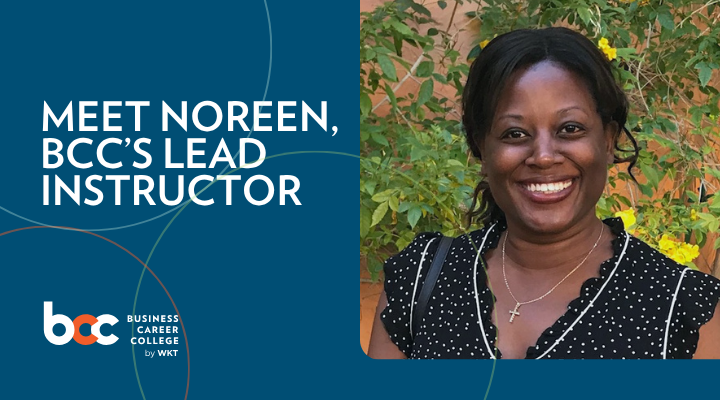
Noreen has been in that room with learners since 2006. As a senior instructor and industry advisor at Business Career College, she has watched hundreds of candidates move from overwhelmed to licensed. Her perspective on what works, what slows learners down, and why preparation is more than practice exams is worth paying attention to.
The moment she knew this work mattered
Noreen’s path into learner support started with a role at London Life, where she was hired as a Training Manager to support candidates preparing for the LLQP and mutual fund exams.
“I quickly realized that I had a strong ability to help students succeed, and I found it incredibly rewarding to witness their ‘aha’ moments when complex concepts finally clicked,” she says.
That early experience shaped how she thinks about her role today. It was never just about exam mechanics. It was about watching someone shift from uncertain to confident, and understanding that the quality of their preparation had a direct effect on the quality of their career.
“I’ve always believed in the value of life insurance, and I appreciated that my role allowed me to contribute to the development of knowledgeable, confident professionals entering the field.”
What learners are actually looking for
When Noreen is asked what motivates the learners she works with, her answer goes well beyond passing rates and study hours.
“While passing the exam is the immediate goal, many learners are looking for something deeper. A lot of them are motivated by the desire to serve their family and friends, and to build a career that has a meaningful impact.”
“What has surprised me over time is how many genuinely want to understand the products, not just memorize content, so they can confidently recommend solutions and properly protect their clients’ needs.”
This is an important distinction. Learners who approach LLQP exam prep with genuine curiosity about the material tend to retain it differently than those chasing a pass mark. They ask better questions, use office hours more effectively, and arrive at the exam with something more durable than memorized answers.
As licensing pathways continue to expand, including into securities and CIRO exam preparation, Noreen sees that same motivation growing. “This desire for real understanding and credibility becomes even more important,” she says.
What LLQP Learners Consistently Underestimate
For anyone beginning their LLQP exam prep, the first surprise is usually the volume of material.
“Many learners underestimate both the length of the process and the level of commitment required. When they first register, they don’t expect to receive four comprehensive manuals, and they’re often surprised by the volume of material they need to cover.”
This is not a warning meant to discourage. It is context that makes preparation better. Knowing upfront that LLQP is a multi-week, structured commitment allows learners to plan their time honestly rather than assume they can compress the process into a few weekends.
“It’s not just about studying. It’s about consistently investing time and effort over several weeks to truly understand the content.”
The prep pattern that slows learners down
One of the most common patterns Noreen sees is learners jumping straight into practice exams before working through the actual manuals.
“They assume that by memorizing questions and answers, they’ll be able to pass. In reality, this approach tends to backfire. Many end up failing the certification exams and then realize that shortcuts don’t work with the LLQP.”
“The most effective approach is to focus on understanding the material first, reading the manuals, building a solid foundation, and then using practice exams to reinforce that knowledge rather than replace it.”
This matters more than most learners expect. Practice exams are a tool for testing comprehension, not a shortcut around it. When learners reverse that sequence, they often find themselves recognizing question patterns without actually understanding the concept underneath, which becomes a problem the moment an exam question is framed differently.
CFP and QAFP exam prep: A different kind of challenge
For learners working toward their Certified Financial Planner (CFP) or Qualified Associate Financial Planner (QAFP) designation, BCC offers dedicated exam prep programs that reflect the distinct demands of each credential.
CFP exam prep requires a comprehensive understanding of financial planning across investment, tax, retirement, and estate planning domains. QAFP exam prep is designed for professionals earlier in their career who want a recognized, rigorous designation without the full CFP pathway. Both programs are built for working professionals balancing study with active careers.
Explore BCC’s financial planning exam prep programs to find the right fit for your designation goal.
What office hours actually look like
One of BCC’s most practical differentiators is structured access to instructor support through office hours. For learners who have never used them before, it helps to know exactly what happens in that space.
Office hours at BCC are scheduled sessions where learners can connect directly with their instructor to ask questions, work through difficult concepts, review practice scenarios, or talk through a study strategy. There is no set agenda. The session is shaped entirely by what the learner brings.
“Some students come in with specific topics they want to review, while others bring practice questions or scenarios they’d like to work through. My goal is to adapt to where they are in their learning.”
“They leave with greater clarity, a better understanding of the material, and the confidence to continue studying on their own.”
For a learner who has been stuck on the same concept for three days, that shift in clarity is not a small thing. It is often the difference between continuing and quitting.
Support that doesn’t clock out at 5 PM
For Noreen, support is not a feature. It is a commitment to availability.
“I want learners to feel that they’re not on their own, that help is always within reach. Whether they’re studying during the day or have a question on a Friday night, they can expect a response within 24 hours.”
That kind of consistency, knowing that a question sent on a weekend will not sit unanswered until Monday, keeps momentum alive. Exam prep has a natural rhythm, and disrupting it with a prolonged gap in support can quietly erode confidence.
A note on women entering insurance and financial services
When asked about women in the industry, Noreen’s answer was direct and grounded in what she has observed.
“I’ve seen a noticeable and encouraging increase in the number of women entering the financial services industry. It’s a field that offers strong growth opportunities, flexibility, and the ability to build a meaningful career while helping others.”
She also made a point about representation that goes beyond career opportunity.
“Some clients might feel more comfortable speaking with someone who understands their experiences and perspectives. By entering this field, women not only build their own careers but also play an important role in supporting and empowering other women to make informed financial decisions.”
For career changers considering insurance or financial services, her advice is straightforward: “Go for it. Engage early, use the support available to you, and don’t wait until you’re stuck to ask for help.”